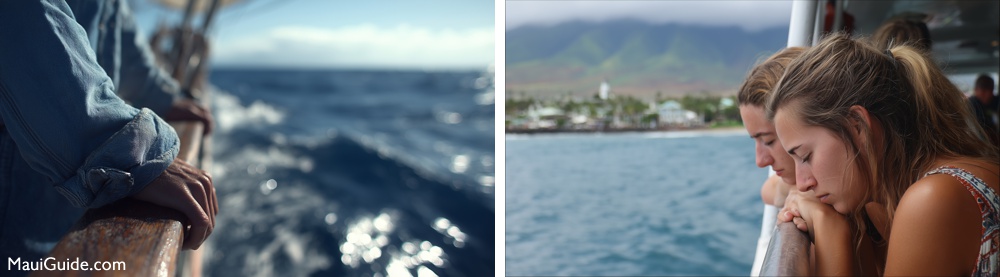
You’ve made it to our island, booked your snorkel, scuba, snuba, or Maui sailing trip and all is seemingly golden in paradise. Then you set sail on the magnificently blue Pacific Ocean only to have your stomach immediately beg to be taken back to shore. Most of us have been there, and all of us never want to return.
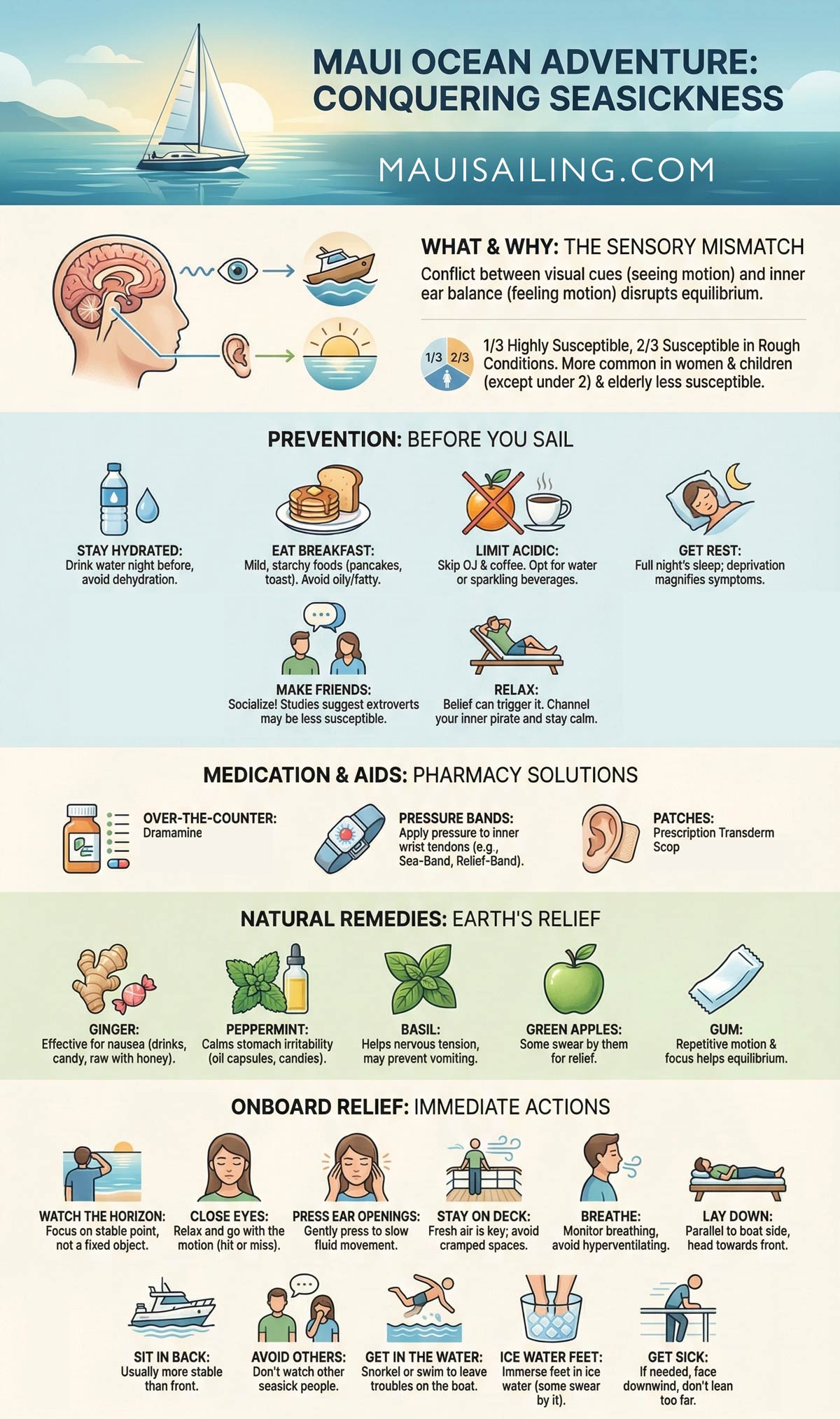
But before you can prevent seasickness, it helps to understand why it happens in the first place. Seasickness is caused by a disparity between visual stimuli and motion information from the canals of your inner ear. Basically you see one thing but feel another, which causes problems with your equilibrium and makes for one very unpleasant combination. About 1/3 of the general population is highly susceptible to seasickness and many more are susceptible enough to be affected under rough conditions. Seasickness is more prevalent in women and children; however, children under two years of age seem to be immune and elderly people are much less susceptible in general.

So how do you prevent getting seasick? We’ve rounded up lots of methods, from a few old wives’ tales to much more common antidotes.

Prevention
By far the best method is knowing what’s likely to make you sick and avoiding those things altogether.
- Stay hydrated – We know you’re on vacation, which probably involves several variations of delicious adult beverages, but at least for the night before your tour, drink lots of water and avoid dehydration, which can bring on symptoms of seasickness.
- Eat breakfast – Mild, starchy foods like pancakes, biscuits, toast, potatoes, etc. are best. Avoid oily and fatty foods that may add to the effects of nausea.
Limit acidic foods and drinks – Stay away from orange juice and coffee and opt for water or carbonated beverages like sparkling water and soda. - Get some rest – Sleep deprivation magnifies the effects of motion sickness, so try to get a full night of sleep before your morning tour.
- Check your ears – Wax build-up has been reported to lead to motion sickness, so maybe get your ears checked out before getting on the boat.
- Decongest – Since your inner ears are affected by congestion, use some vapor rub or chili powder to help decongest and clear your nasal passages.
- Make friends – It may be a little late for this tip, but studies have shown that motion sickness is greater in introverts (Kottenhoff & Lindahl, 1960). Chat up anyone and everyone and see what happens. At the very least, you might meet someone willing to hold your hair back, although we hope it doesn’t come to that.
- Relax – Scientific studies have shown that people can become seasick by convincing themselves that being on a boat will make them seasick. Relax, channel your inner pirate and tell yourself you’re a master of the open seas. Bring it on, Pacific!
Medication
There are several medications on the market for people who experience motion or seasickness, so consider taking one of the following. Check with your doctor or pharmacist beforehand to know which ones will work best.
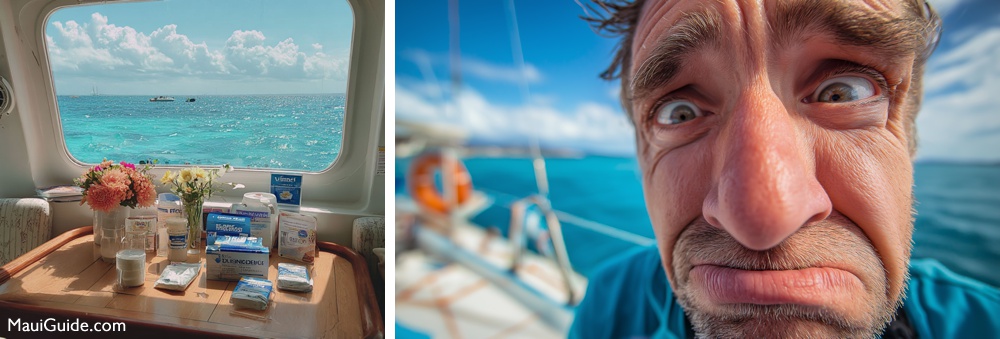
The important thing to remember is to take medication in advance as suggested on box for the best possible results. Most motion-sickness meds can cause drowsiness, do not mix with alcohol, and check with a pharmacist if you’re pregnant, have glaucoma, or take sedating meds.
Pressure Bands
Pressure bands work by applying constant pressure to tendons in your inner wrist, which some people find help relieve symptoms of seasickness. Many variations exist, some even battery-operated, so if medication hasn’t worked for you in the past, consider trying one of these instead.
Patches
If seasickness is a major concern, you might even want to go the prescription route with Transderm Scop, a patch applied behind the ear at least 4 hours before getting on a boat and effective for up to 3 days. Caution: possible dry mouth, blurry vision, drowsiness, and it’s not for everyone.
Natural Remedies
If drugs aren’t your thing or you want to avoid the chance of any unfavorable side effects, there are several natural remedies that won’t require a trip to the pharmacy:
- Ginger – Typically very effective in relieving nausea, consider bringing ginger-flavored drinks, candy, or even toss some raw ginger in a bit of honey for the best results.
- Peppermint – Much like ginger, peppermint has been said to calm stomach irritability. Peppermint oil capsules or candies will work just fine.
- Basil – Besides its ability to help with nervous tension, basil can also be used to prevent vomiting, which may come in mighty handy.
- Green Apples – Some people swear by them, other people say they do absolutely nothing. You be the judge. Either way, it may just keep the doctor away.
- Gum – Not only will it give you something else to focus on, but the repetitive motion of chewing has been said to help with your sense of equilibrium.
Let’s say you’re on the boat and haven’t done anything to prevent your seasickness (tisk tisk) but find yourself in need of some immediate relief. Here a few tips to minimize seasickness while onboard:
- Watch the horizon – Focusing on something stable helps give your inner ear and eyes the same sense of motion. Don’t fix your eyes on a single point, but keep the horizon in your line of vision.
- Close your eyes – If watching the horizon isn’t working, close your eyes, relax, and go with the motion of the boat instead of fighting it. This is a hit or miss idea. Sometimes, this can make it worse. Depends on the person.
- Press on ear openings – With your index fingers, press gently on your ear openings, which increases the pressure and slows the movement of fluid in your ear canals, reducing the feeling of movement.
- Stay on deck – Do not go in enclosed, cramped areas if possible. Get as much fresh air as you can by staying on deck.
- Breathe – Monitor your breathing and try not to hyperventilate, which increases the effects of nausea.
- Lay down – Lie on your side, parallel to the side of the boat, and point your head towards the front.
Sit towards the back – It’s usually more stable than the front end and will help lessen the amount of movement. - Avoid people – Other seasick people, that is (see: make friends). Don’t watch or sit near other people who did not read this and are feeling seasick. Nobody likes a sympathy puker.
- Get in the water – The great thing about getting seasick in Maui is that you’re probably on a boat to get in the water. Hop in and let your troubles stay on the boat.
- Immerse your feet in ice water – Not sure if this one really works, but some people swear by it. If you’re getting married in Maui, this is a great way to get your cold feet phase out of the way before the wedding.
- Get sick – While not the best way to avoid seasickness, it happens and might even make you feel better. Just remember to face away from the wind and don’t lean too far over the boat.
Your trip to Maui deserves to go as smoothly as possible, so use these tips to your advantage and make your time on the water a happy memory.